
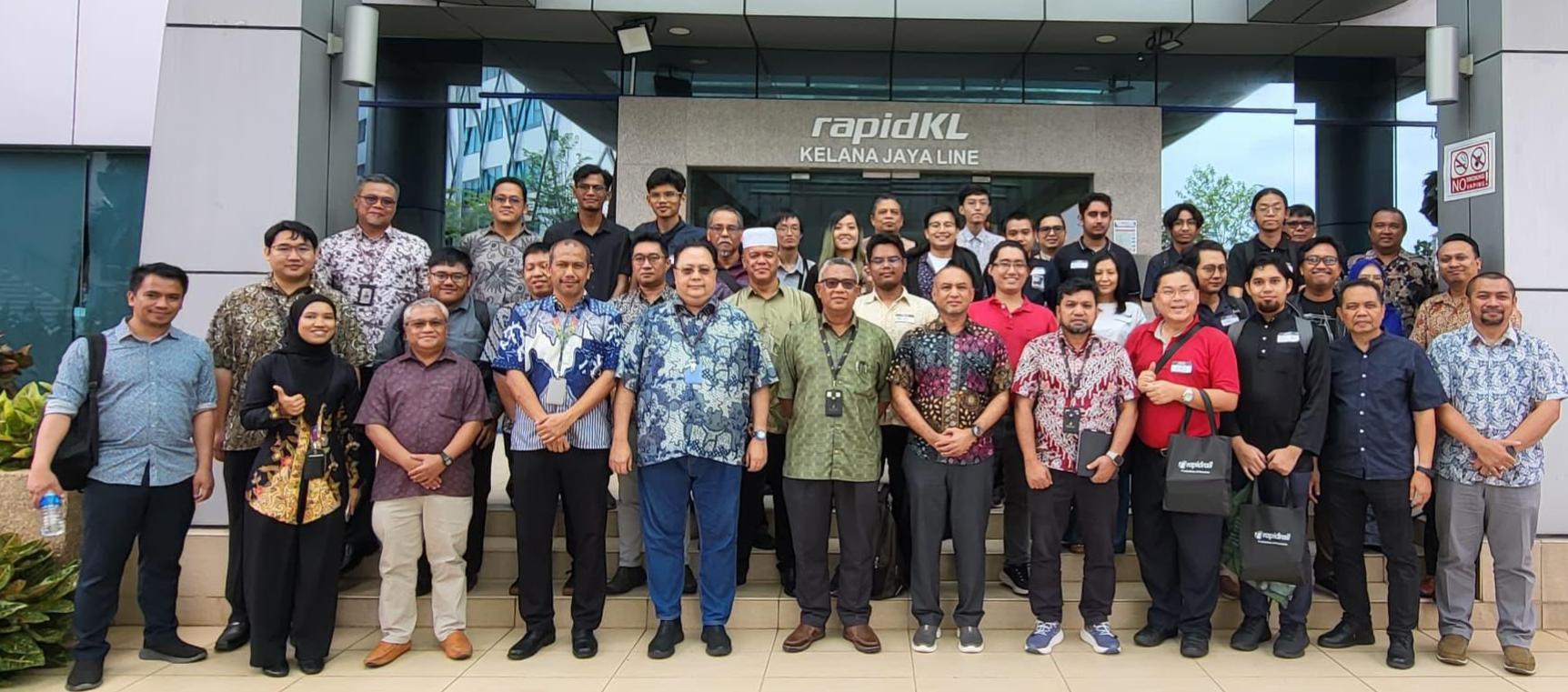
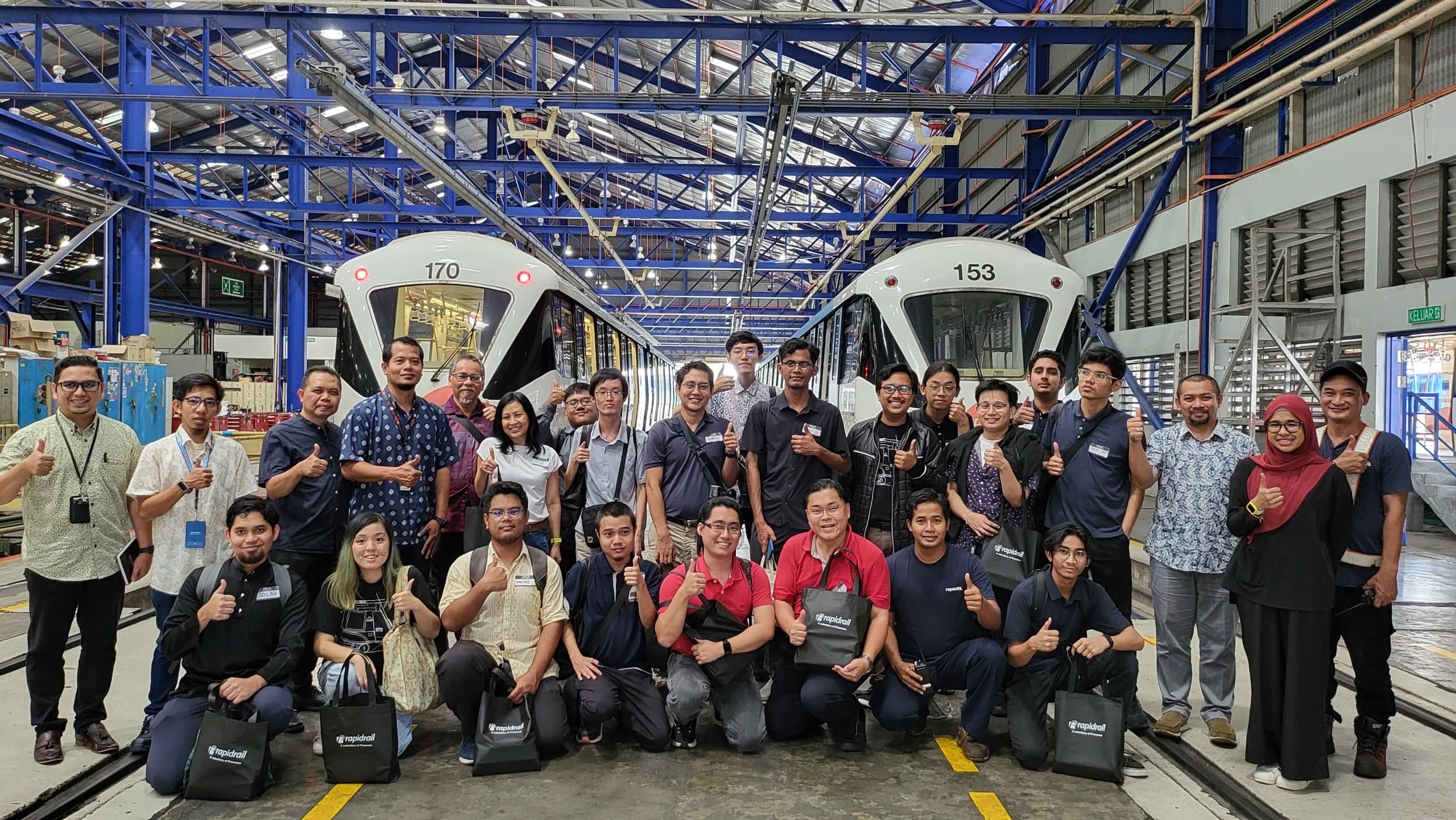
On 22nd November 2024, Transit Malaysia was invited to attend a Focus Group Session (FGD) with the Rapid Rail leadership, including the CEO, Amir Hamdan and the organisation’s senior officers. The session was an initiative by the Malaysian Land Public Transport Fans (MLPTF), and supported by Rapid Rail to create a space for engagement between the rail service provider and its end users. The session included FGDs, a depot visit and control centre viewing and a Q&A session.
Transit Malaysia would like to highlight key points from the event. As of today, Rapid Rail has achieved over 1.03 million daily ridership. Additionally, the My50 subscriptions now total over 240,000 users. These metrics indicate a positive trend towards public transportation use, especially rail services.
However, there was improvement feedback that was raised during the session. A participant brought up the maintenance operations of stations’ amenities, including toilets, lifts and escalators. Rapid Rail responded that vandalism and parts unavailability were the main challenges of amenities maintenance. Toilets and urinals get clogged up at a rate that the operations team could not cope with. This is compounded by petty thievery of items like toilet paper and even hand dryers. There is also the infamous case of the Maharajalela Station escalator where the infrastructure has been out of service for almost a decade. Rapid Rail clarified that the escalator was damaged because of the construction adjacent to it. Water seeping into its system meant that the entire thing had to be replaced, incurring significant costs that Rapid could not cover for the time being.
With regards to government support, Rapid Rail CEO, Amir Hamdan revealed that the major Kelana Jaya line outage in 2022 was a huge wake-up call for the federal government to increase maintenance funding of the country’s rail infrastructure. Rapid Rail’s maintenance expenditure has therefore been able to grow from RM70 mil a year to almost RM200 mil a year. Based on Transit’s ongoing assessment, this increase in maintenance funding has led to noticeable and significant improvement in overall rail infrastructure. We have observed fewer broken escalators, and breakdowns since the 2022 outage.
Another issue raised in the discussion was regarding train frequency. Today, peak hour frequencies are decent on all the lines of between 2-5 minutes. However, off-peak frequencies remain at a disappointing 10 minutes for a majority of the rail lines. The CEO revealed that the current operational limits of the systems have led to Rapid Rail choosing to focus on optimizing rail operations for peak hours only during weekdays. Two limitations highlighted were the lack of spare trains to support high-frequency operations, and the time limitation to carry out maintenance. Both of which are matters that involve significant resources and funding. Importantly, the CEO acknowledged the unsatisfactory customer experience of low frequencies and is aware that improvement is necessary to improve Rapid Rail operations.
In a separate discussion with the Head of the Ampang Line, he mentioned that the completion of substations for the Ampang Line by 2026 is projected to improve frequencies for the Ampang Line. It is apparent that the Rapid Rail management is striving towards improving frequencies. However, Transit believes that while this is confirmation that the government is supportive of providing maintenance funding, more investment is needed to push Rapid Rail and other rail operators’ standards to achieve a satisfactory user experience.
Other discussions include the installation of bike racks; the difficulty of procuring parts of the many variations of train models; dealing with local authorities; wayfinding and many others during our insightful visit. At the end of the session, the attendees were given a private train ride to Ara Damansara LRT. It was truly a fruitful experience for all and we thank Rapid Rail for hosting Transit Malaysia and MLPTF. We would like to give special mention to Zac Cheong, President of MLPTF and a Transit Malaysia committee member for spearheading this event. We look forward to future collaborations.
 Transit Malaysia